

Healing Trauma & Reducing Anxiety and Depression
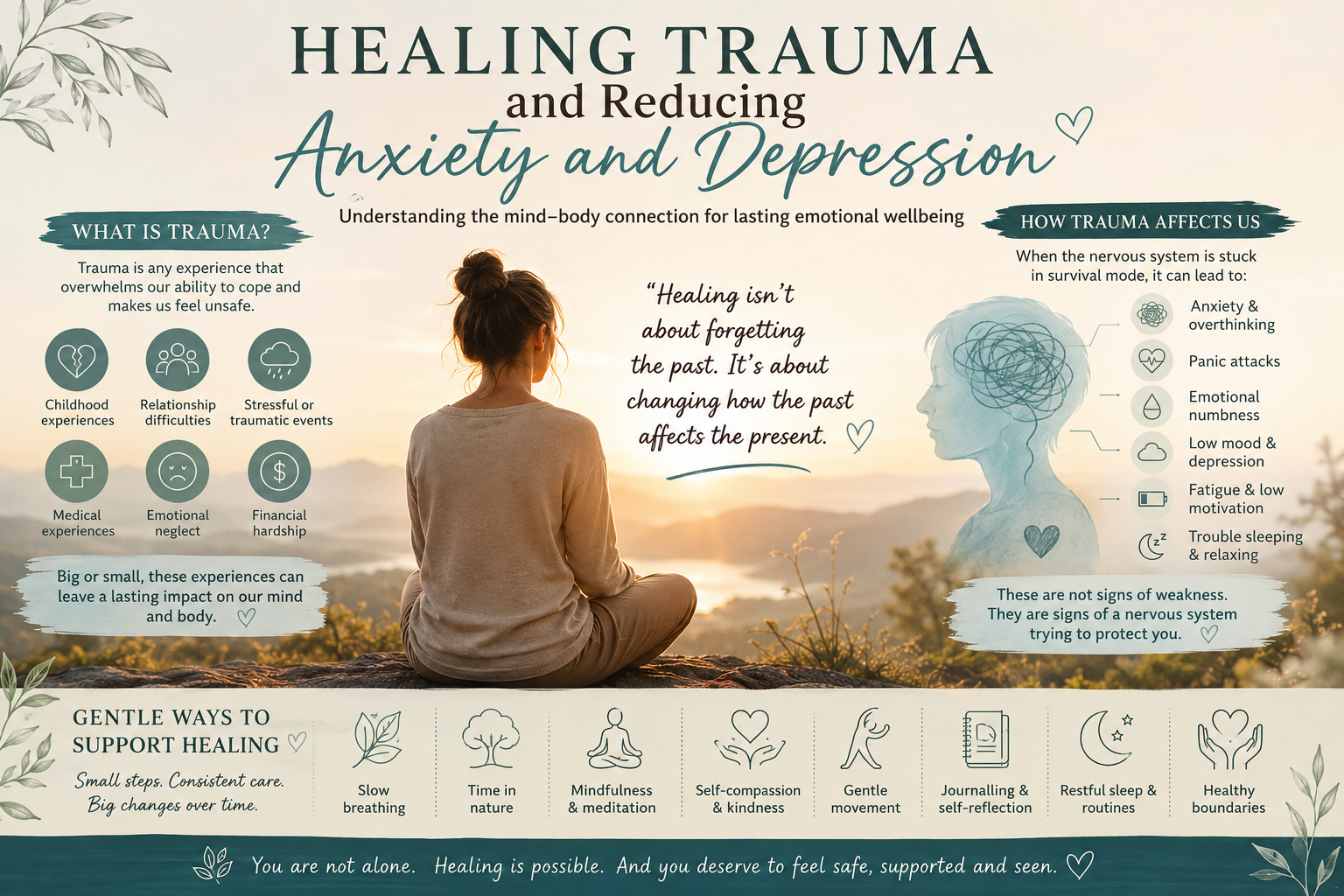
Trauma affects far more than our memories.
It can quietly shape how we think, feel, react and experience the world every single day. Many people spend years trying to manage anxiety or depression without realising that unresolved trauma may be sitting beneath these experiences.
Understanding the connection between trauma, anxiety and depression helps us approach emotional wellbeing with greater compassion. Rather than asking, “What’s wrong with me?” we can begin asking, “What has happened to me, and how has it affected my nervous system?”
As we learn more about how trauma influences the body and mind, we can begin taking gentle steps towards greater emotional balance.
Understanding Trauma Beyond Major Life Events

When people hear the word trauma, they often think of major accidents, violence or natural disasters. While these experiences can certainly be traumatic, trauma is much broader than many people realise.
Trauma can develop whenever an experience overwhelms our ability to cope. It is not defined solely by the event itself but by how our nervous system responds to it.
Experiences that may contribute to trauma include:
Childhood emotional neglect
Bullying
Family conflict
Relationship breakdowns
Grief and loss
Medical procedures
Workplace stress
Financial hardship
Ongoing emotional criticism
Many seemingly small experiences can accumulate over time, leaving the nervous system in a constant state of alertness.
How Trauma Affects the Nervous System

The nervous system is designed to protect us from danger.
When we experience a threatening situation, our body automatically activates survival responses such as fight, flight or freeze. These responses are essential for keeping us safe during genuine danger.
However, when traumatic experiences remain unresolved, the nervous system may continue operating as though danger is still present.
This ongoing state of survival can lead to:
Racing thoughts
Difficulty relaxing
Trouble sleeping
Hypervigilance
Emotional overwhelm
Irritability
Feeling disconnected
Physical tension
These reactions are not signs of weakness. They are protective responses developed by the body in an effort to stay safe.
The Connection Between Trauma, Anxiety and Depression

Trauma can influence emotional wellbeing in many different ways.
For some people, the nervous system remains highly activated. This often contributes to anxiety, making everyday situations feel overwhelming or unsafe.
Common signs may include:
* Constant worry
* Overthinking
* Panic attacks
* Difficulty concentrating
* Feeling on edge
* Fear of making mistakes
For others, prolonged stress may eventually lead the nervous system into a shutdown response. This can contribute to symptoms commonly associated with depression, such as:
* Low energy
* Emotional numbness
* Withdrawal from others
* Loss of motivation
* Difficulty experiencing joy
* Feeling disconnected from daily life
Every person’s experience is unique, and people may move between these responses over time.
Why Trauma Lives in Both the Mind and Body

Trauma is often remembered not only through thoughts but also through physical sensations and emotional responses.
Someone may understand that a difficult event is over, yet their body still reacts as though it is happening in the present.
This is why certain sounds, places, smells or situations can trigger intense emotional or physical reactions even years later.
The body stores patterns of protection that once helped us survive. These patterns may continue long after they are no longer needed.
Understanding this helps explain why healing often involves more than simply thinking differently.
Common Signs That Unresolved Trauma May Be Present

Trauma affects everyone differently, but some common signs include:
* Persistent anxiety
* Difficulty trusting others
* Feeling emotionally numb
* Chronic stress
* Perfectionism
* Low self-worth
* Avoiding certain situations
* Feeling constantly exhausted
* Emotional overwhelm
* Difficulty relaxing even during peaceful moments
Experiencing these symptoms does not automatically mean someone has unresolved trauma, but they can be important signals worth exploring with appropriate support.
Supporting the Nervous System Through Gentle Daily Practices

Supporting emotional wellbeing often begins with creating moments of safety throughout the day.
Simple practices may include:
Slow, controlled breathing
Gentle stretching or movement
Spending time outdoors
Mindfulness
Grounding techniques
Regular sleep routines
Journalling
Limiting chronic stress where possible
Practising self-compassion
These practices may seem small, but over time they can help the nervous system learn that it is safe to relax.
Healing Is Not About Forgetting

One common misconception is that healing means forgetting painful experiences.
In reality, healing is often about changing our relationship with those experiences.
The memories may still exist, but they no longer control our daily lives in the same way.
Many people find that as their nervous system becomes more regulated, they experience:
* Greater emotional resilience
* Improved sleep
* Better relationships
* Increased confidence
* More energy
* A greater sense of calm
Healing is rarely a straight line. There may be setbacks, moments of growth and periods of rest along the way. Every step forward, no matter how small, is meaningful.
Self-Compassion Plays an Important Role

Many people who have experienced trauma are incredibly hard on themselves.
They may believe they should “just get over it” or wonder why they still struggle years later.
Self-compassion encourages a different perspective.
Instead of judging ourselves for our responses, we can recognise that our nervous system has been trying to protect us in the best way it knew how.
Treating ourselves with patience, understanding and kindness creates an environment where emotional wellbeing can gradually improve.
Trauma, anxiety and depression are deeply connected for many people, yet every person’s experience is unique.
Understanding how trauma influences the nervous system helps replace self-blame with compassion. It reminds us that many emotional responses developed as protective strategies rather than personal failures.
Healing is not about becoming someone new. It is about reconnecting with a sense of safety, balance and emotional wellbeing, one small step at a time.